

Project Overview
TPA3118 amplifier + Bluetooth audio receiver portable speaker: In this build, a TPA3118 Class-D amplifier drives a real speaker (up to 60W), while a Bluetooth audio receiver module streams audio from your phone. A TP4056 charges 18650 cells so the whole system runs from battery power.
- Time: ~3 hours (mostly enclosure work)
- Skill level: Intermediate
- What you will build: A portable battery-powered Bluetooth speaker with 60W amplification.

Parts List
From ShillehTek
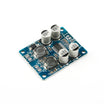
- TPA3118 60W Mono Amplifier - main Class-D amplifier stage for the speaker output.
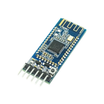
- HM-10 BLE Module (for iOS/Android control) - optional BLE control module (not used for audio streaming).
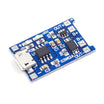
- TP4056 LiPo Charger - charges the 18650 battery pack and provides protection (board dependent).
- MT3608 Boost Converter - boosts battery voltage up to the amplifier supply voltage (example: 12V).
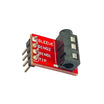
- 3.5mm Stereo Audio Jack - optional wired audio input.
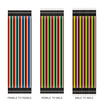
- 120 PCS Dupont Jumper Wires - prototyping and internal wiring.
External
- A real 4Ω or 8Ω full-range speaker (10W+ rated)
- 2x 18650 LiPo cells (in parallel for capacity)
- Bluetooth audio receiver module (separate from HM-10; this one outputs analog audio, e.g. CSR8635 / BTM-825 / KRC-86B)
- 3D-printed or wooden speaker enclosure
- Power switch + volume knob (10kΩ pot)
Note: For audio streaming, you need a dedicated Bluetooth audio receiver (analog audio out), not the HM-10 (which is a data-only BLE module). The HM-10 is optional for controlling power/volume from a phone app.
Step-by-Step Guide
Step 1 - Plan the Build
Goal: Lay out the modules and confirm the signal and power flow before you cut the enclosure or solder anything.
What to do: Place the Bluetooth audio receiver, volume potentiometer, TPA3118 amplifier, TP4056 charger, batteries, and MT3608 boost converter so you can keep audio wiring short and keep power wiring tidy.

Expected result: You have a clear placement plan and know where the speaker, switch, charging port, and volume control will mount.
Step 2 - Wire the Audio Path
Goal: Connect audio from the Bluetooth receiver (and optional 3.5mm jack) into the amplifier through a volume control.
What to do: Wire the Bluetooth receiver left/right analog outputs into a 10kΩ potentiometer, then feed the potentiometer output into the TPA3118 audio input. Wire the TPA3118 output terminals to the speaker.

- BT audio receiver L+R out to 10kΩ pot to TPA3118 audio L+R in (combine for PBTL mode)
- TPA3118 OUT+ / OUT- to speaker terminals
Expected result: With power applied later, you will be able to control volume and hear the Bluetooth receiver audio through the speaker.
Step 3 - Wire the Power
Goal: Build the battery, charging, and boost supply so the system can run portable.
What to do: Connect the two 18650 cells in parallel to the TP4056 battery pads, route the TP4056 input into the MT3608, and set the MT3608 output voltage for your amplifier. Power the amplifier and Bluetooth receiver from the MT3608 output (use regulation if your receiver requires a lower voltage).
- 2x 18650 in parallel to TP4056 B+/B-
- TP4056 IN+/IN- to MT3608 IN+/IN-
- Set MT3608 output to 12V (turn the trim-pot CW)
- MT3608 OUT to TPA3118 VCC + BT receiver VCC (via a 5V regulator if it needs 5V)
- Add a SPDT switch on the MT3608 input
Expected result: The speaker can be powered on/off with the switch, charged through the TP4056, and run the amplifier from the boosted supply.
Step 4 - Build the Enclosure
Goal: Mount the speaker and electronics in a rigid enclosure that improves sound and protects the wiring.
What to do: Build or print an enclosure, cut openings for the speaker, charging port, switch, and volume control, and secure all modules so they cannot move or short against the enclosure.


Expected result: Everything is mounted cleanly, with a sealed speaker area and accessible controls and charging port.
Step 5 - Test
Goal: Verify charging, power-up, pairing, and clean audio output before final close-up.
What to do: Charge the battery pack, power on the system, pair your phone to the Bluetooth audio receiver, and play audio at low volume first. Then increase volume and confirm there is no distortion or intermittent power.

Expected result: The receiver pairs successfully and audio plays through the speaker with stable power.
Step 6 - Where to Take It Next
Goal: Identify upgrade paths if you want more features after the base build works.
What to do: Choose an add-on that fits your goals and enclosure space.
- Add a second TPA3118 for true stereo (left + right channels)
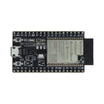
- Replace the BT receiver with an ESP32 + I2S to make a custom audio source (web radio, etc.)
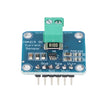
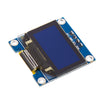
- Add an OLED + INA219 to display battery state-of-charge
- Build into a vintage radio case for a modern-internals look
Expected result: You have a clear next feature to implement without changing the core audio/power architecture.
Conclusion
This build combines a TPA3118 Class-D amplifier with a Bluetooth audio receiver and a TP4056-charged 18650 battery pack to make a portable speaker that can fill a room. You get the sound quality of a real driver and the flexibility to customize the enclosure and controls.
Want the exact parts used in this build? Grab them from ShillehTek.com. If you want help customizing this project or building something for your product, check out our IoT consulting services.
Credit: This version was adapted from a reference guide on Instructables.


.png?v=25000753014097803521791168436)

.png?v=68677308723310773341791168436)


