


Project Overview
3S BMS 18650 power box: This build uses a 3S 25A balanced BMS protection board and three 18650 cells in series to create a safe, portable 12V-class battery box for camping gear, ham radio, and LED strips.
A 12V portable battery box is a universal power source for camping, ham radio, LED strip lighting, ebike side projects, and outdoor maker installations. Three 18650 cells in series gives you 11.1V nominal (12.6V fully charged), which is close enough to “12V” for any device that accepts about 11V to 13V input. Add a 3S BMS for protection and balance charging, and you have a safe, repairable, replaceable power supply.
This guide walks through building a 3S 18650 12V portable battery box using a 3S 25A balanced BMS, a simple cell holder, and an enclosure. It can scale up to larger packs by adding parallel cells (while keeping the pack at 3S).
- Time: 45 to 90 minutes
- Skill level: Intermediate
- What you will build: A 3S (11.1V nominal) portable battery box with protected output and balance charging support
Parts List
From ShillehTek
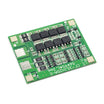
- 3S 25A 18650 Battery Protection Board with Balancer - provides cell protection and balance charging for a 3-cell series pack
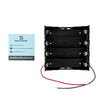
- 4 x 18650 Battery Holder Box - convenient holder; you will use 3 of the 4 slots for a 3S pack
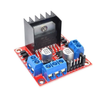
- L298N Motor Driver - optional; use only if your project needs motor driving, otherwise use a buck converter if you need 5V/9V from the same pack
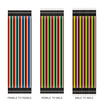
- DuPont Wires - helpful for prototyping, tap-offs, and internal wiring in the enclosure
External
- Three matched 18650 cells (example: 3000mAh, 10A discharge each) - matched cells help balancing and longevity
- A 12.6V CC/CV lithium charger (3S preset) - for charging a 3S lithium pack
- A project enclosure (waterproof if outdoor) with a panel-mount XT60 or 5.5/2.1mm barrel jack for the output
- Optional 4mm banana jacks - for tap-off connectors
- Optional inline fuse holder and 10A blade fuse - for output short protection
Note: This guide describes a 3S (3 cells in series) pack. If you use a 4-slot holder, leave one slot empty and wire only three cells in series. Always connect BMS balance leads in the correct voltage order to avoid damaging the BMS.
Step-by-Step Guide
Step 1 - Understand why 3S 18650 works for “12V”
Goal: Confirm the voltage range you will get from a 3S lithium pack and what devices it suits.
What to do: Plan for a pack voltage range of about 9.0V (empty) to 12.6V (full), with a nominal 11.1V. Many “12V” devices accept roughly 10.5V to 13.8V (LED strips, ham radios, small fans, BLDC motors). If your load requires a steady 12.0V, plan to add a buck-boost regulator on the output.
Expected result: You know whether your device can run directly from 3S, or if you need regulation.
Step 2 - Arrange the cells and plan the series wiring
Goal: Create a correct 3S series layout and identify the balance tap points.
What to do: In a 3S holder, alternate cell orientation so the negative of cell 1 sits next to the positive of cell 2, and the negative of cell 2 sits next to the positive of cell 3. Connect the series links across the holder with nickel strip or wire (example: 18 AWG).
Code:
Pack(-)  =  Cell1(-)
            Cell1(+) ---|----- Cell2(-)
                          Cell2(+) ---|----- Cell3(-)
                                          Cell3(+)  =  Pack(+)

Balance taps:
  B-    -> Pack(-)
  B1    -> junction Cell1(+) / Cell2(-)
  B2    -> junction Cell2(+) / Cell3(-)
  B+    -> Pack(+)
Expected result: You have a correct 3-cell series chain with clearly identified Pack-, Pack+, and the two mid-point junctions for B1 and B2.
Step 3 - Wire the 3S BMS (B-, B1, B2, B+, P-)
Goal: Connect the BMS so it can monitor each cell and control the pack output safely.
What to do: Identify the five key connection points: B-, B1, B2, B+, and P-. Connect the balance taps in voltage order: B- to Pack(-), B1 to the Cell1(+)/Cell2(-) junction, B2 to the Cell2(+)/Cell3(-) junction, and B+ to Pack(+). The pack positive output is B+. The load connects between B+ and P- (the BMS switches P- to disconnect the load under fault).

Expected result: The BMS is connected to each cell tap correctly, and your output negative is routed through P-.
Step 4 - Charge the pack correctly
Goal: Charge the 3S pack using an appropriate 12.6V CC/CV charger while allowing the BMS to balance.
What to do: Feed 12.6V CC/CV charging through the same B+ / B- terminals used for discharge. Many low-cost chargers are preset for 3S lithium. For maximum control, a hobby charger (iMax B6 style) lets you set exact voltage and current.
Expected result: The pack charges to full (12.6V), and the BMS can balance cells during charging.
Step 5 - Add output connectors and optional tap-offs
Goal: Make the pack usable by adding a practical main output and any extra ports you need.
What to do: Wire the main output connector to B+ (positive) and P- (negative). If you want additional outputs, mount them to the enclosure and wire them appropriately (often through a buck converter for USB).

- Main 12V out: XT60 or 5.5/2.1mm barrel jack on the box, wired to B+ / P-.
- Cigarette lighter socket: add a panel-mount 12V socket for car-style 12V devices.
- USB out: add a 12V to 5V buck (or a 12V-to-USB module) for charging phones and microcontroller projects.
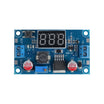
- Battery-level meter: a voltmeter module with a panel cutout shows pack voltage at a glance.
Expected result: You can plug your device into a solid main output, and optionally power USB or other accessories from the same pack.
Step 6 - Add basic safety measures (fuse and insulation)
Goal: Reduce the risk of catastrophic shorts and exposed conductors inside the enclosure.
What to do: Add an output fuse (example: 10A blade fuse). Heat-shrink every joint. Do not rely on the BMS as a substitute for a fuse; it provides cell balance and over-current trip, not guaranteed catastrophic short protection. Charge in a fire-safe area.
- Fuse the output with a 10A blade fuse.
- Heat-shrink every joint. PVC tape can soften and slip.
- The BMS does not replace a fuse.
- Charge in a fire-safe area.
Expected result: Your build is safer for real-world use and better protected against wiring accidents.
Step 7 - Apply the pack to common use cases
Goal: Confirm where a 3S 12V-class battery box is a good fit.
What to do: Use the battery box anywhere you need portable 12V-class power, and add regulation only if your load requires a fixed voltage.
- Camping / overlanding: run an LED strip, a fan, and a USB charger.
- Ham radio operating: power a 12V radio for portable operation.
- Outdoor LED installation: lighting for events or art installs.
- Ebike auxiliary pack: run headlights, horn, or heated grips isolated from the main pack.
- Workshop power pack: power small 12V accessories.
Expected result: You have a clear plan for deploying the pack safely in your project.
Conclusion
You built a portable 12V-class battery box using three 18650 cells in 3S and a 3S balanced BMS protection board for safer charging and discharge. With the right output connector and a fused, insulated build, it becomes a practical power source for camping, ham radio, and LED strips.
Want the exact parts used in this build? Grab them from ShillehTek.com. If you want help customizing this pack (outputs, regulation, enclosure layout) or building something for your product, check out our IoT consulting services.


.png?v=25000753014097803521791168436)

.png?v=68677308723310773341791168436)


