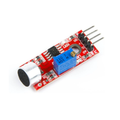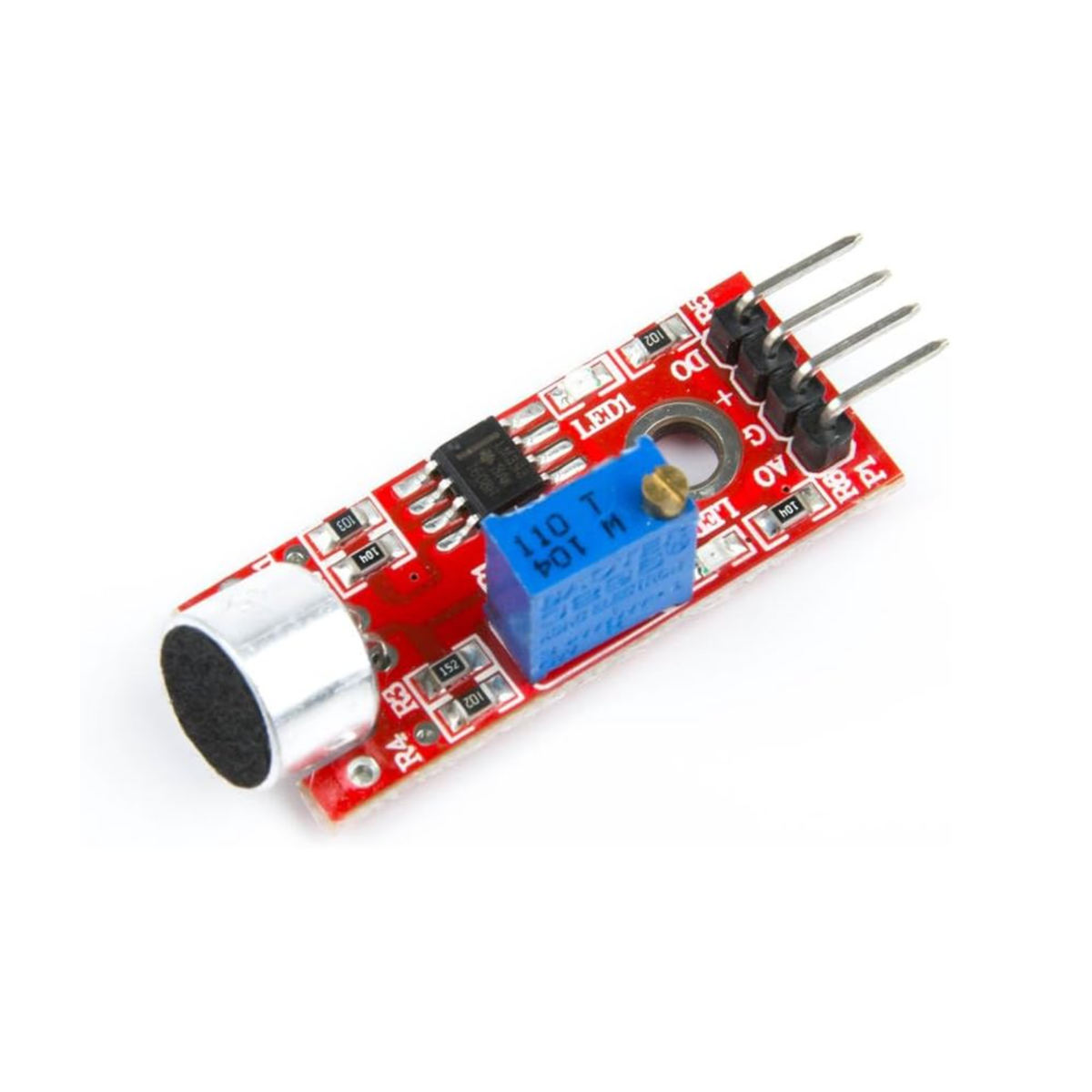
SHILLEHTEK KY-037 Sound Sensor Module for Arduino ESP32 Kits
Couldn't load pickup availability

Features:
- Sound Detection: The module has a built-in microphone that detects sound waves in the surrounding environment. When sound waves reach the microphone, they cause changes in air pressure.
- Plug-and-Play Compatibility: KY-037 is compatible with common development boards and microcontrollers, offering a plug-and-play solution for users with varying levels of technical expertise.
- Versatile Applications: Suitable for a wide range of applications, including sound-activated electronic projects, voice recognition systems, and interactive sound installations.
- Analog Signal Generation: The microphone converts these changes in air pressure into analog electrical signals. The strength of the electrical signal corresponds to the intensity of the sound.
No additional feature info available.
No documents available. Please contact us for more information.
I was able to get mine working using a ESP32 and ESPHome firmware. I think the main point is to treat it like an analog sensor and then play around with the smoothing to get the best results. It works nicely for what I was trying to do with it, but I will probably go with a MEMS for future projects just because of the size.
This device is very sensitive and can be used for presence detection with a bit of programming. I'm not sure if it provides enough precision to measure accurate sound levels so wouldn't relay on it for that. Does not come with instructions but google and internet provides.
I am just an amateur gadgeteer, but I've not had any issues with the board or it's capabilities. I used it in a sound detection project for Halloween, the course detection abilities were just fine for outdoor use controlling lights and sounds. It wires up easy and provided stable sound detection.. A win for me..
The sound sensor detects noise changes quickly and responds reliably in Arduino projects. Some tuning may be needed for accuracy, but it works as expected.
The microphone mount position is sensitive to bending around and some came out of position. But should be easy enough to use
Microphone was bent in the package. Unit would power on when supplied with the proper voltage but would always register a very low signal. Adjusting the potentiometer only changed the readings a tiny bit. Even when loud noises were made near the microphone, the readings would not change. Tried testing analog outputs and digital outputs and they always were registering the same level of noise, no matter how loud or quiet the room was. Useless for any practical application.
A good sound detector.This detector was easy to interface with Arduino projects.The analog or digital output allows for different options in your projects.The sensitivity of this detector was good, and the adjustable level for the digital output made setup simple.I recommend this Sound Sensor Module.
Mine arrived looking like it had a tough time in flight. I had to untwist the mic before use.This is a super simple device. It has a little bit of an gain on a differential amplifier to the pickup and deliversn an analog or digital value based on the reported sound being above or below the threshold of the dials. I just tested with a scope and power supply. I was able to get signals approaching half of the input voltage at loud inputs. THe input seemed slower to reach than I'd have expected , but I'd imagine this is fine for remote sensing starting guns, stage flashpots or effect triggers, an alarm going off, detecting a machine making more - or less - sound than usual, etc.There is a digital pin described as i2c and spi but in the absence of a clock pin, it's not at all clear how that would work. No clock was was observed on either outut pin. There's only one chip on it and LM393 is a comparator, not an ADC or anything that would given an I2C/SPI outupt as described.Per the description. "It comes with documentation _online_", which means it doesn't come with documentation.This is the first Shillehtech product I can recall reviewing unkindly. The messed up mic and the misleading doc about the digital abilities was just a miss, plus it seems expensive for what it is.
Normally if a product arrives broken, I give the seller/manufacturer a chance to replace it. However this deserves a low rating because of how poorly constructed it is.Evidence that it's broken: I set my power supply to a 50 mA limit on 5 V, and that was not enough to supply 5 V to the power input (the product page claims about 0.5 mA is the power consumption.Look at the photos; out of the package the microphone was all twisted around and I think the leads were touching. I bent the mic into the position shown on the product page photos, but even then, it was drawing 250 mA from a 5 V supply (after I increased my current limit).there are no instructions that come with this thing; I don't know whether clockwise or counter-clockwise increases sensitivity, but assuming a 22 turn pot, I tried the thing over the range of pot settings, and I never got any satisfaction that things were working.Just because of the lack of rugged construction, I say this is a non-starter, even if you happen to get one that is functional at the beginning.
The item arrived fine without any damage, one of the pins on the GPIO was slightly bent but this was not problematic. The microphone seemed just fine. Connecting this to a raspberry Pi and getting the GPIO recorded wasn’t too hard and they include some information on their website which takes you to YouTube.I tried to tune the sensor with the trimmer pot but I had poor luck. I wanted to remove some of the background noise so intentional sounds would register better, and only the loudest sounds were coming through. This should probably be done in software but I was hoping for a combination of both.Overall the project functions and there’s cool tutorials in this. It’s also a tight little package. If you want to do some sound sensing pick this up.