Skip to product information
1 of 7

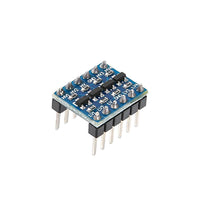
SHILLEHTEK IIC I2C Logic Level Converter 3.3V-5V Bi-Directional

SHILLEHTEK IIC I2C Logic Level Converter 3.3V-5V Bi-Directional

Regular price $6.25 USD
Regular price $6.50 USD Sale price $6.25 USD
Sale Sold out
Tax included. Shipping calculated at checkout.

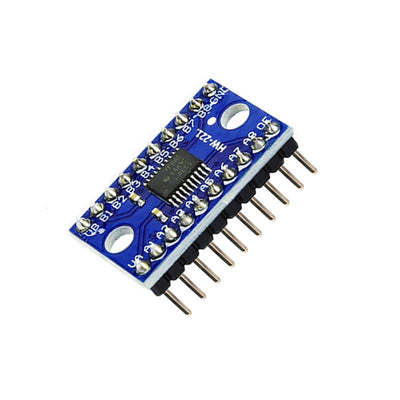
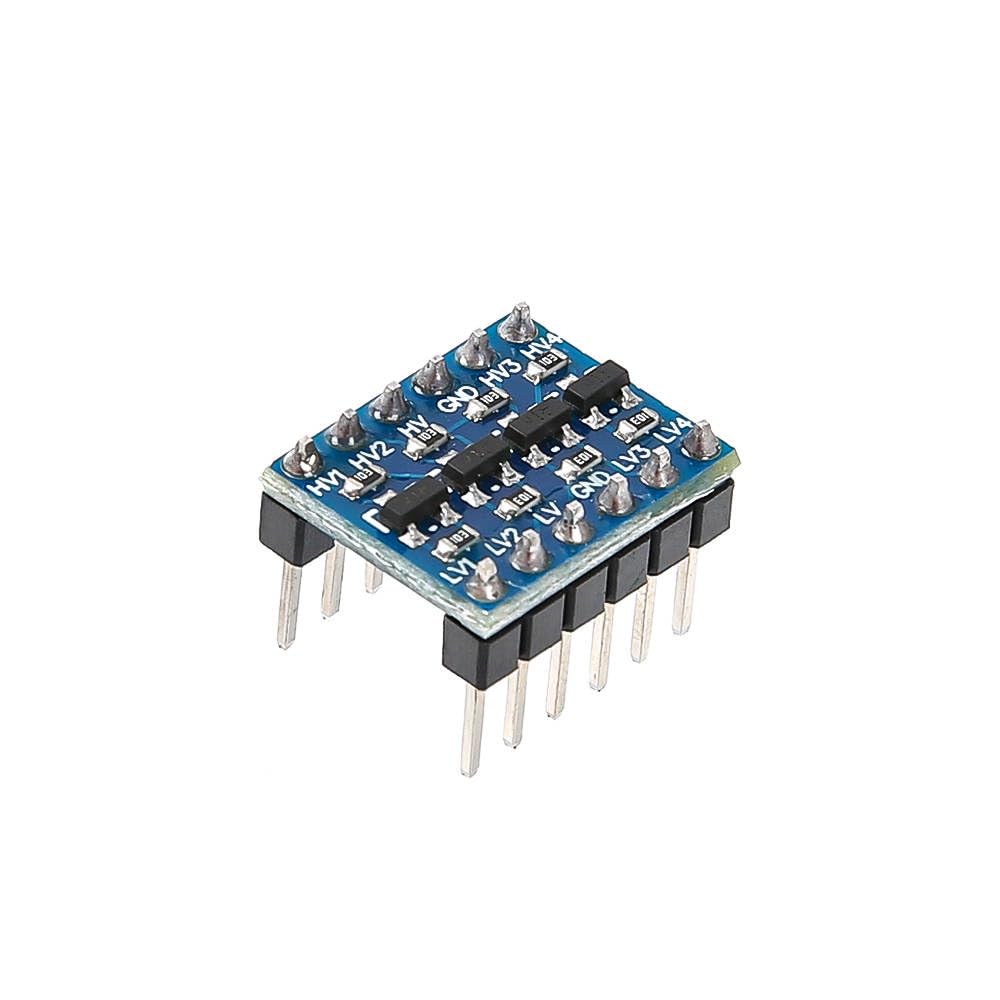
Bi-directional 3.3V to 5V logic level converter for I2C/IIC lines, ideal for mixing Raspberry Pi/ESP32 with 5V modules.

View full details

The ShillehTek I2C Logic Level Converter (3.3V to 5V, bi-directional) lets 3.3V boards safely communicate with 5V devices on IIC/I2C and other digital lines without flaky signals or risking damage. It is perfect when you are mixing systems like Raspberry Pi, ESP32, Pico W (3.3V) with Arduino UNO, 5V sensors, or 5V modules. This bi-directional converter is commonly used on I2C buses (SDA/SCL) and can also be used for other digital signals where clean level shifting matters.

No additional feature info available.

No documents available. Please contact us for more information.

Product Overview

The ShillehTek I2C Logic Level Converter (3.3V to 5V, bi-directional) lets 3.3V boards safely communicate with 5V devices on IIC/I2C and other digital lines without flaky signals or risking damage. It is perfect when you are mixing systems like Raspberry Pi, ESP32, Pico W (3.3V) with Arduino UNO, 5V sensors, or 5V modules. This bi-directional converter is commonly used on I2C buses (SDA/SCL) and can also be used for other digital signals where clean level shifting matters.

Product Overview

The ShillehTek I2C Logic Level Converter (3.3V to 5V, bi-directional) lets 3.3V boards safely communicate with 5V devices on IIC/I2C and other digital lines without flaky signals or risking damage. It is perfect when you are mixing systems like Raspberry Pi, ESP32, Pico W (3.3V) with Arduino UNO, 5V sensors, or 5V modules. This bi-directional converter is commonly used on I2C buses (SDA/SCL) and can also be used for other digital signals where clean level shifting matters.

Features & Specs

[Safe 3.3V to 5V Shifting]: Protects 3.3V boards while allowing reliable communication with 5V devices.


[Bi-Directional I2C Support]: Designed for SDA/SCL level shifting so reads and writes work cleanly both ways.


[Perfect for Mixed-Voltage Builds]: Use with Raspberry Pi, ESP32, Pico W, and Arduino projects that share sensors.


[Clean Signal, Fewer Glitches]: Reduces I2C errors and weird behavior caused by voltage mismatches.


[Simple Drop-In Module]: Easy wiring for quick prototyping and tidy conversions in breadboard setups.

Features & Specs

[Safe 3.3V to 5V Shifting]: Protects 3.3V boards while allowing reliable communication with 5V devices.


[Bi-Directional I2C Support]: Designed for SDA/SCL level shifting so reads and writes work cleanly both ways.


[Perfect for Mixed-Voltage Builds]: Use with Raspberry Pi, ESP32, Pico W, and Arduino projects that share sensors.


[Clean Signal, Fewer Glitches]: Reduces I2C errors and weird behavior caused by voltage mismatches.


[Simple Drop-In Module]: Easy wiring for quick prototyping and tidy conversions in breadboard setups.

Documents

Documents

Related Videos

Related Videos

Customer Reviews

Based on 43 reviews
81%
(35)
14%
(6)
2%
(1)
0%
(0)
2%
(1)
K
Kindleのお客様
ピンはハンダ付けされていません

ピンがハンダ付けされていない商品が届いたので返品しました。

W
Waseem
Highly recommend!!

Fantastic board for both beginners and experienced makers! It’s incredibly easy to use!!!!

R
Rae
Works great!

It’s easy to install and is a quality product

D
David Abel

Worked

A
A
Ease of use

No issues with the unit, specs as described, no setbacks with my project

h
hameez117
Great solder

Very pleased with this purchase, great solder and packaging

N
NORMA B
No complaints!

Works perfectly! Pre-soldered and super easy to use with my Raspberry Pi and Arduino projects — no hassle, just plug and play.

E
Engineer

Great product and the quality was good. The price was just right. would purchase from the seller again

B
Bassel
Great component

I needed this component for my Pico w to step down the level was shocked how simple it was to use

S
Steven LeBrun
Great module to have when working with Raspberry Pi and Arduino.

This 4 Channel Logic Level converter works great for converting the 3.3 V signals from a Raspberry Pi to a 5 V signal needed by some sensors and displays. It also works great converting Arduino 5 V signals to 3.3 V signals used by Raspberry Pi and some sensors and displays. It is also useful when you want to use use an Arduino as an I2C device controlled by a Raspberry Pi.Signal voltage is converted in both directions. You just need to supply a Vcc at the voltage on one side and a different Vcc to the other side. This is a useful module.

Customer Reviews

Based on 43 reviews
81%
(35)
14%
(6)
2%
(1)
0%
(0)
2%
(1)
K
Kindleのお客様
ピンはハンダ付けされていません

ピンがハンダ付けされていない商品が届いたので返品しました。

W
Waseem
Highly recommend!!

Fantastic board for both beginners and experienced makers! It’s incredibly easy to use!!!!

R
Rae
Works great!

It’s easy to install and is a quality product

D
David Abel

Worked

A
A
Ease of use

No issues with the unit, specs as described, no setbacks with my project

h
hameez117
Great solder

Very pleased with this purchase, great solder and packaging

N
NORMA B
No complaints!

Works perfectly! Pre-soldered and super easy to use with my Raspberry Pi and Arduino projects — no hassle, just plug and play.

E
Engineer

Great product and the quality was good. The price was just right. would purchase from the seller again

B
Bassel
Great component

I needed this component for my Pico w to step down the level was shocked how simple it was to use

S
Steven LeBrun
Great module to have when working with Raspberry Pi and Arduino.

This 4 Channel Logic Level converter works great for converting the 3.3 V signals from a Raspberry Pi to a 5 V signal needed by some sensors and displays. It also works great converting Arduino 5 V signals to 3.3 V signals used by Raspberry Pi and some sensors and displays. It is also useful when you want to use use an Arduino as an I2C device controlled by a Raspberry Pi.Signal voltage is converted in both directions. You just need to supply a Vcc at the voltage on one side and a different Vcc to the other side. This is a useful module.