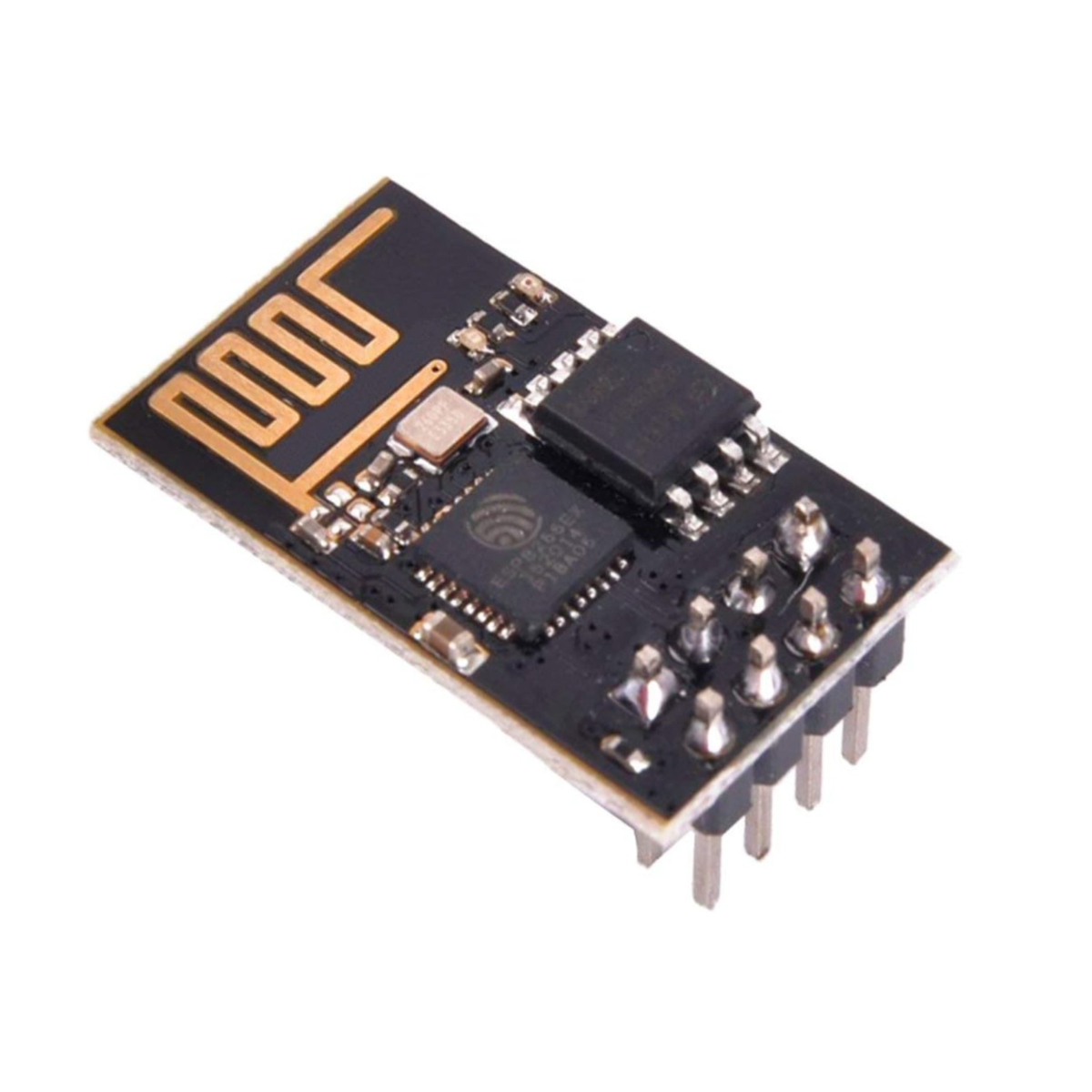
ESP8266 ESP-01 Serial WiFi Module 1MB Wireless Transceiver for IoT
SKU ST-YT5JQ7PMKXFY
ESP8266 ESP-01 1MB WiFi module with 1MB flash, ideal for hosting simple web servers as a standalone microcontroller for compact IoT projects.
Bulk eligible
Mix any Bulk eligible products — discount applies to your total quantity across the cart.| Buy 5+ | $5.22 each | Save 5% |
| Buy 10+ | $4.94 each | Save 10% |
- Free Ground Shipping U.S. orders $35+
- Ships from USA Worldwide via DHL
- 30-day returns Free defect replacement
- 7-day support Fast email replies
 ESP8266 ESP-01 Serial WiFi Module 1MB Wireless Transceiver for IoTNo reviews yet
$5.49
This item
ESP8266 ESP-01 Serial WiFi Module 1MB Wireless Transceiver for IoTNo reviews yet
$5.49
This item

Products related to this item


Overview
Product Overview
The ESP8266 ESP-01 is a compact Wi‑Fi transceiver and self-contained networking module that gives microcontrollers internet access or can run simple web servers and automation tasks on its own, thanks to a 32‑bit Tensilica L106 processor. This 1MB model provides expanded storage for libraries and supports OTA firmware updates, while the integrated TCP/IP stack and preloaded firmware simplify sending GET/POST requests or connecting to MQTT brokers for data logging. Control and flashing are handled over a standard Serial UART interface (RX/TX) using AT commands or a USB‑TTL adapter, and built‑in deep sleep modes drop consumption to micro‑amps for battery‑powered sensor projects. Practical, small, and proven for IoT prototyping and lightweight standalone applications.
Questions & answers
Frequently asked questions
Have other questions?
Chat with our US-based team — we usually reply fast.
What's included
Features & Specs
Reference
Documents
Full Product Manual ShillehTek ESP8266 ESP-01 Serial WiFi Module 1MB Wireless Transceiver IoT | ShillehTek Product Manual In-depth setup guide with wiring, code examples, and troubleshooting.Learn
Related Tutorials

Arduino Nano ESP-01: Add Wi-Fi with AT Commands

Arduino Pro Mini CP2102: Flash and read serial

ESP32 vs ESP8266: Pick the Best Board for 2026

CP2102 USB-to-TTL: Flash ESP-01 and STM32 boards
Watch
Related Videos
Verified buyers
Customer Reviews
ESP8266 ESP-01 Serial WiFi Module 1MB Wireless Transceiver for IoT