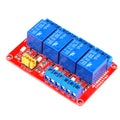
4-Channel 5V Relay Module for Arduino & Raspberry Pi
SKU AQ-E1AN-UQUQ
4-channel 5V relay board for Arduino and Raspberry Pi, providing four independent GPIO-controlled switches for automation.
Bulk eligible
Mix any Bulk eligible products — discount applies to your total quantity across the cart.| Buy 5+ | $7.12 each | Save 5% |
| Buy 10+ | $6.75 each | Save 10% |
- Free Ground Shipping U.S. orders $35+
- Ships from USA Worldwide via DHL
- 30-day returns Free defect replacement
- 7-day support Fast email replies
 4-Channel 5V Relay Module for Arduino & Raspberry Pi
★★★★★
(6)
$7.50
This item
4-Channel 5V Relay Module for Arduino & Raspberry Pi
★★★★★
(6)
$7.50
This item

Products related to this item




Overview
Product Overview
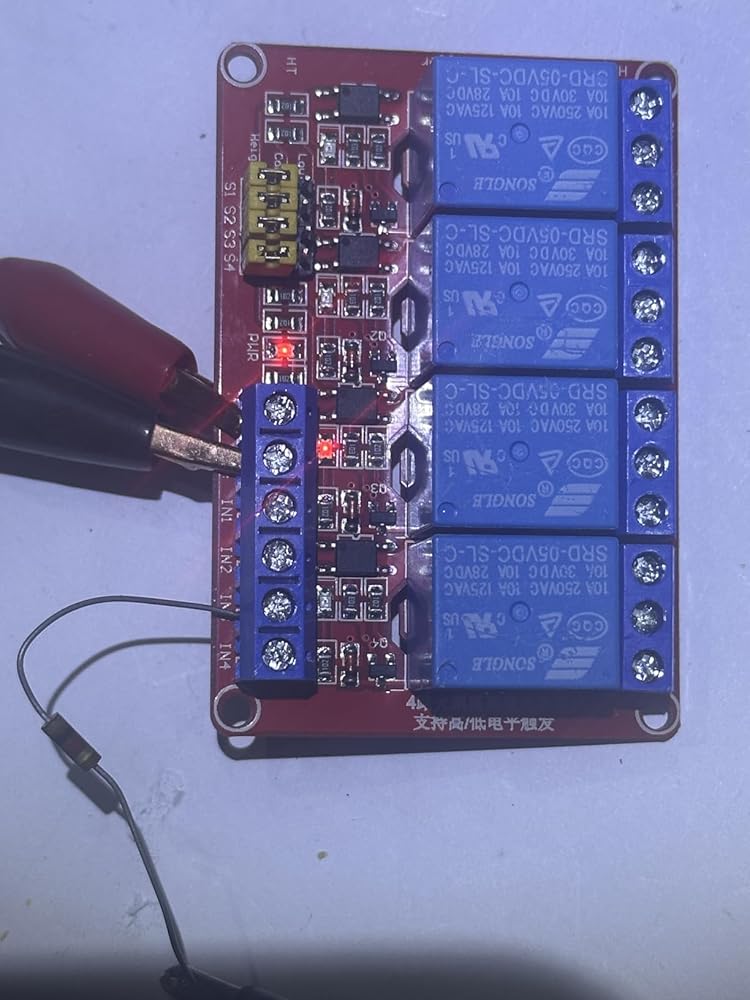
The 4-Channel 5V Relay Module lets an Arduino or Raspberry Pi control up to four devices independently, acting like four GPIO-controlled on/off switches in one board. It is a great middle ground when you need more than a single relay but do not want a large multi-relay panel. Use it for multi-zone lighting, pumps, fans, solenoids, small automation panels, and test setups where you want simple, reliable switching from a 5V control system.
Each of the four channels switches through relay contacts rated up to 10 A at 250 VAC or 30 VDC, with NO/NC/COM screw terminals and a status LED per channel. Opto-isolated inputs trigger cleanly from 3.3 V or 5 V GPIO logic, and the JD-VCC jumper lets you power the relay coils from a separate 5 V supply for full isolation from your controller in noisier installations.
Questions & answers
Frequently asked questions
Have other questions?
Chat with our US-based team — we usually reply fast.
What's included
Features & Specs
Reference
Documents
Full Product Manual ShillehTek 4-Channel 5V Relay Module for Arduino & Raspberry Pi Board | ShillehTek Product Manual In-depth setup guide with wiring, code examples, and troubleshooting.Learn
Related Tutorials

Arduino Relay vs MOSFET: Choose the Right Switch

Arduino 4-Channel Relay Module: Reverse a DC Motor
Watch
Related Videos
Verified buyers
Customer Reviews




4-Channel 5V Relay Module for Arduino & Raspberry Pi