

Video Tutorial (Optional)
Watch first if you want to follow along with the full MQTT setup and Pico W code in real time.
Project Overview
In this project, you use a Raspberry Pi Pico W with MQTT (HiveMQ broker) in MicroPython to send messages between multiple Pico W devices from anywhere over the internet. By the end, you will be able to publish and subscribe to MQTT topics to build a true distributed IoT system.
Everything used here is free to work with, and the approach scales from simple message passing to larger device fleets.
- Time: 30 to 60 minutes
- Skill level: Intermediate
- What you will build: Two Pico W devices that publish and subscribe to the same MQTT topic via HiveMQ Cloud
Parts List
From ShillehTek
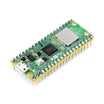
- Raspberry Pi Pico 2W - the WiFi microcontroller board used in this build
External
- 2x USB cables (for power and programming)
- Computer with Thonny installed
- WiFi network credentials (SSID and password)
- HiveMQ Cloud account and cluster: https://www.hivemq.com/mqtt-cloud-broker/ and console at https://console.hivemq.cloud/
- MicroPython MQTT libraries:
- simple.py: https://github.com/micropython/micropython-lib/blob/master/micropython/umqtt.simple/umqtt/simple.py
- robust.py: https://github.com/micropython/micropython-lib/tree/master/micropython/umqtt.robust/umqtt
Note: The code examples use TLS (ssl=True) and expect you to provide your HiveMQ cluster hostname, username, and password via a constants module.
Step-by-Step Guide
Step 1 - Allow multiple Thonny instances
Goal: Control more than one Pico W from the same computer by running multiple Thonny windows.
What to do: In Thonny, go to Tools > Options > General and untick Allow only single Thonny instance.
Restart Thonny to activate the change.
You do not need this if each Pico W is connected to a different computer. This is only needed when you want multiple Pico W devices connected to the same computer at the same time.

Once enabled, open another Thonny instance.
To open another instance on macOS, run this in Terminal:
/Applications/Thonny.app/Contents/MacOS/thonnyExpected result: You can open two Thonny windows and select a different connected Pico W in each window.
Step 2 - Set up the MQTT broker (HiveMQ Cloud)
Goal: Create a cloud MQTT broker that your Pico W devices can publish to and subscribe from over the internet.
What to do: MQTT (Message Queuing Telemetry Transport) is a lightweight publish-subscribe protocol commonly used for IoT messaging. A broker routes messages from publishers to subscribers using topics.
To get started with HiveMQ Cloud:
- Go to https://www.hivemq.com/mqtt-cloud-broker/ and click Try out for free.
- Navigate to https://console.hivemq.cloud/
- Create a cluster, then create a username and password in the access management tab.
- Save the username, password, and cluster URL. You will need these in MicroPython.
Expected result: You have a HiveMQ Cloud cluster hostname plus credentials you can use from both Pico W devices.
Step 3 - Add the MicroPython MQTT libraries to each Pico W
Goal: Install the required MQTT client code so each Pico W can connect to HiveMQ and publish or subscribe.
What to do: On all Pico W devices, add the following MicroPython library files to the filesystem:
- simple.py: https://github.com/micropython/micropython-lib/blob/master/micropython/umqtt.simple/umqtt/simple.py
- robust.py: https://github.com/micropython/micropython-lib/tree/master/micropython/umqtt.robust/umqtt
These libraries allow you to publish and subscribe to topics from the broker over the internet.
Expected result: Both Pico W devices have the MQTT library code available to import in your scripts.
Step 4 - Run the publisher code on Pico W #1
Goal: Connect Pico W #1 to WiFi, connect to HiveMQ, and publish a message to a topic repeatedly.
What to do: On one Pico W, run this code.
Notes from the original tutorial:
- This publishes to a topic named Topic and sends the same message every second. Change these values for your application.
- You must substitute your values in constants.
- The client id does not have to be mahmood.
Code:
#Native libs
import network
import time
import random

#Third Party
from umqtt.robust import MQTTClient

# Internal libs
import constants


def connectMQTT():
    '''Connects to Broker'''
    # Client ID can be anything
    client = MQTTClient(
        client_id=b"mahmood",
        server=constants.SERVER_HOSTNAME,
        port=0,
        user=constants.USER,
        password=constants.PASSWORD,
        keepalive=7200,
        ssl=True,
        ssl_params={'server_hostname': constants.SERVER_HOSTNAME}
    )
    client.connect()
    return client


def connect_to_internet(ssid, password):
    # Pass in string arguments for ssid and password

    # Just making our internet connection
    wlan = network.WLAN(network.STA_IF)
    wlan.active(True)
    wlan.connect(ssid, password)

    # Wait for connect or fail
    max_wait = 10
    while max_wait > 0:
      if wlan.status() < 0 or wlan.status() >= 3:
        break
      max_wait -= 1
      print('waiting for connection...')
      time.sleep(1)
    # Handle connection error
    if wlan.status() != 3:
       print(wlan.status())
       raise RuntimeError('network connection failed')
    else:
      print('connected')
      print(wlan.status())
      status = wlan.ifconfig()

def make_connections():
    # Connect to internet and set MPU to start taking readings
    connect_to_internet(constants.INTERNET_NAME, constants.INTERNET_PASSWORD)
    return connectMQTT()


def publish(topic, value, client):
    '''Sends data to the broker'''
    print(topic)
    print(value)
    client.publish(topic, value)
    print("Publish Done")


client = make_connections()

while True:

    publish('Topic', 'test _message', client)

    time.sleep(1)
Expected result: The Thonny console shows that the Pico W connects to WiFi, connects to the broker, and publishes a message every second.
Step 5 - Run the subscriber code on Pico W #2
Goal: Connect Pico W #2 to WiFi, subscribe to the same topic, and print incoming messages.
What to do: On the other Pico W, run this code.
Notes from the original tutorial:
- This reads from the topic and uses a callback so the library can display the messages.
- Make the client id different than the first device, or you will get an error.
Code:
#Native libs
import network
import time

#Third Party
from umqtt.simple import MQTTClient

# Internal libs
import constants


def connectMQTT():
    '''Connects to Broker'''
    # Client ID can be anything
    client = MQTTClient(
        client_id=b"other client",
        server=constants.SERVER_HOSTNAME,
        port=0,
        user=constants.USER,
        password=constants.PASSWORD,
        keepalive=7200,
        ssl=True,
        ssl_params={'server_hostname': constants.SERVER_HOSTNAME}
    )
    client.connect()
    return client


def connect_to_internet(ssid, password):
    # Pass in string arguments for ssid and password

    # Just making our internet connection
    wlan = network.WLAN(network.STA_IF)
    wlan.active(True)
    wlan.connect(ssid, password)

    # Wait for connect or fail
    max_wait = 10
    while max_wait > 0:
      if wlan.status() < 0 or wlan.status() >= 3:
        break
      max_wait -= 1
      print('waiting for connection...')
      time.sleep(1)
    # Handle connection error
    if wlan.status() != 3:
       print(wlan.status())
       raise RuntimeError('network connection failed')
    else:
      print('connected')
      print(wlan.status())
      status = wlan.ifconfig()

def make_connections():
    # Connect to internet and set MPU to start taking readings
    connect_to_internet(constants.INTERNET_NAME, constants.INTERNET_PASSWORD)
    return connectMQTT()


def my_callback(topic, response):
    # Perform desired actions based on the subscribed topic and response
    print("Received message on topic:", topic)
    print("Response:", response)


def subscribe(topic, client):
    '''Recieves data from the broker'''
    client.subscribe(topic)
    print("Subscribe Done")

client = make_connections()
client.set_callback(my_callback)
subscribe('Topic', client)

while True:
   time.sleep(5)
   client.check_msg()
Expected result: After everything is set up correctly, you start seeing messages printed in the subscriber console at each interval.
Conclusion
You set up multiple Raspberry Pi Pico W boards to send messages anywhere over the internet using MQTT with a HiveMQ Cloud broker in MicroPython. With one device publishing and another subscribing to the same topic, you have the foundation for a distributed IoT system.
Want parts for your next IoT build? Shop components and prototyping gear at ShillehTek.com. If you want help designing a production-ready IoT system (device firmware, cloud messaging, and architecture), check out our IoT consulting services.


.png?v=25000753014097803521791168436)

.png?v=68677308723310773341791168436)


