

Video Tutorial (Optional)
Watch first if you want to follow along as two Raspberry Pi Pico W boards send messages to each other in MicroPython using Thonny.
Project Overview
In this project, you use two Raspberry Pi Pico W boards and their built-in WiFi to send messages between devices in MicroPython using the Thonny IDE. One Pico W runs a simple socket server that returns a random number, and the other Pico W runs a client that requests and prints that value.
- Time: 15 to 30 minutes
- Skill level: Beginner
- What you will build: A two-device Pico W client and server that exchange data over WiFi using sockets
Parts List
From ShillehTek
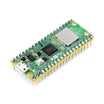
- Raspberry Pi Pico 2W - the WiFi microcontroller board used in this build
External
- Computer with Thonny IDE installed
- 2x USB cables (to connect both Pico W boards)
- WiFi network credentials (SSID and password)
Note: This tutorial uses MicroPython on the Pico W and connects both boards to the same WiFi network using a constants file for credentials.
Step-by-Step Guide
Step 1 - Allow multiple Thonny instances
Goal: Make it possible to work with two Pico W boards at the same time.
What to do: In Thonny, go to Tools > Options > General and untick Allow only single Thonny instance.

Expected result: Thonny is configured to allow more than one window/instance.
Step 2 - Restart Thonny
Goal: Apply the new Thonny setting.
What to do: Close Thonny completely and reopen it.
Expected result: The setting is active after restart.
Step 3 - Open a second Thonny instance
Goal: Run code on both Pico W boards simultaneously from separate Thonny windows.
What to do: On macOS, open Terminal and run:
/Applications/Thonny.app/Contents/MacOS/thonnyIf you are using Windows or Linux, the process is different. You can open another instance using a similar command in your shell, or by opening the app again.
Expected result: A second Thonny window opens.
Step 4 - Connect each Pico W to its own Thonny window
Goal: Make sure each Thonny instance is talking to a different Pico W.
What to do: Plug both Pico W boards into your computer. In each Thonny window, select the corresponding device/interpreter for that board.
Expected result: You can run code independently on each Pico W from its assigned Thonny instance.
Step 5 - Run the server code on one Pico W
Goal: Start a socket server that listens for connections and sends back a random number.
What to do: In one Thonny instance (connected to the first Pico W), run the following code:
Code:
from machine import Pin, ADC
import network
import random
import socket
import time

import constants


# Just making our internet connection
wlan = network.WLAN(network.STA_IF)
wlan.active(True)
wlan.connect(constants.INTERNET_NAME, constants.INTERNET_PASSWORD)

# Wait for connect or fail
max_wait = 10
while max_wait > 0:
  if wlan.status() < 0 or wlan.status() >= 3:
    break
  max_wait -= 1
  print('waiting for connection...')
  time.sleep(1)
# Handle connection error
if wlan.status() != 3:
   raise RuntimeError('network connection failed')
else:
  print('connected')
  status = wlan.ifconfig()
  #print('ip = ' + status[0])

# Open socket
addr = socket.getaddrinfo('0.0.0.0', 80)[0][-1]

s = socket.socket()
s.bind(addr)
s.listen(1)

print('listening on', addr)

# Listen for connections
while True:
    try:
        cl, addr = s.accept()
        request = cl.recv(1024)
        print(request)
        # No need to unpack request in this example
        ran_num = str(random.randint(0, 100))
        cl.send(ran_num)
        print("Sent: " + ran_num)
        cl.close()

    except OSError as e:
        cl.close()
        print('connection closed')
Expected result: The Pico W connects to WiFi and prints that it is listening on port 80. When the client connects, it sends a random number.
Step 6 - Run the client code on the other Pico W
Goal: Connect to the server Pico W and print the received value.
What to do: In the other Thonny instance (connected to the second Pico W), run the following code. Make sure to replace <Change this> with the server Pico W IP address.
Code:
from machine import Pin, ADC
import network
import random
import socket
import time

import constants

# Just making our internet connection
wlan = network.WLAN(network.STA_IF)
wlan.active(True)
wlan.connect(constants.INTERNET_NAME, constants.INTERNET_PASSWORD)

# Wait for connect or fail
max_wait = 10
while max_wait > 0:
  if wlan.status() < 0 or wlan.status() >= 3:
    break
  max_wait -= 1
  print('waiting for connection...')
  time.sleep(1)
# Handle connection error
if wlan.status() != 3:
   raise RuntimeError('network connection failed')
else:
  print('connected')
  status = wlan.ifconfig()
  #print('ip = ' + status[0])

while True:
    ai = socket.getaddrinfo(<Change this>, 80) # Address of Web Server
    addr = ai[0][-1]

    # Create a socket and make a HTTP request
    s = socket.socket() # Open socket
    s.connect(addr)
    s.send(b"Anything") # Send request
    ss=str(s.recv(512)) # Store reply
    # Print what we received
    print(ss)
    # Set RGB LED here
    s.close()          # Close socket
    time.sleep(0.2)    # wait
Expected result: The client prints the server response, and you should see random numbers being received repeatedly.
Step 7 - Find and set the server IP address
Goal: Ensure the client points to the correct Pico W server on your network.
What to do: In the server code, uncomment the line below to print the server IP address, then use that IP in the client code where it says <Change this>:
#print('ip = ' + status[0])Expected result: The client connects to the correct address and you consistently see random numbers sent from server to client.
Conclusion
You set up two Raspberry Pi Pico W boards using their built-in WiFi to send data back and forth in MicroPython using Thonny. With a simple socket server and client, you can exchange messages and extend this pattern for your own distributed projects.
Want parts for your next Pico W build? Shop components at ShillehTek.com. If you want help customizing this project or designing a connected product, check out our IoT consulting services.


.png?v=25000753014097803521791168436)

.png?v=68677308723310773341791168436)


