


Project Overview
ESP32 + HLK-LD2410 vs RCWL-0516: This guide compares a 24 GHz mmWave presence radar (LD2410 family) and a 3.18 GHz microwave Doppler motion sensor (RCWL-0516) so you can choose the right module for your project and get the detection behavior you expect.
Both are often labeled “radar motion sensors” because they emit radio waves and listen for reflections, but they use different frequencies and different detection techniques. The LD2410 can detect still presence (like breathing at a desk), while the RCWL-0516 detects motion only.
This is a side-by-side comparison of specs, wiring, and practical project fit, including when it makes sense to use both.
- Time: 15 to 25 minutes
- Skill level: Beginner
- What you will build: A clear decision on which radar sensor to use (presence vs motion), plus example ESP32 wiring for each.
Parts List
From ShillehTek
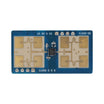
- LD1125H 24GHz mmWave Sensor - alternative mmWave presence sensor option
- HLK-2410C Human Presence Radar - mmWave presence radar variant for occupancy-style detection
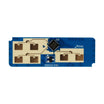
- HLK-LD2450 Multi-Target Tracking Radar - multi-target tracking alternative when you need more advanced radar features
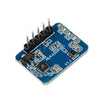
- RCWL-0516 Microwave Doppler Sensor - low-cost motion-only trigger sensor
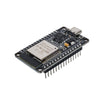
- ESP32 WROOM Dev Board - microcontroller used for wiring examples and testing
External
- USB cables - for powering and testing the ESP32
- Multimeter - for verifying output triggers (HIGH/LOW)
Note: The HLK-LD2410 family can be used as a simple HIGH/LOW sensor via its OUT pin, but UART is needed to access distance gates and energy data.
Step-by-Step Guide
Step 1 - Understand how each sensor detects people
Goal: Learn why the HLK-LD2410 can detect still presence while the RCWL-0516 cannot.

What to do: Compare detection methods.
HLK-LD2410 family: A true 24 GHz millimeter-wave FMCW radar. It emits a chirped signal and measures round-trip time plus Doppler shift of reflections. This lets it report distance (in 0.75 m gates) and the energy of motion at each gate. It can detect “still presence” (for example, a person breathing in a chair).
RCWL-0516: A 3.18 GHz unmodulated Doppler radar with a single threshold detector. Its output pin goes HIGH when something moves anywhere in range. It does not provide distance, presence, or per-zone energy. It detects motion only.
Expected result: You can clearly label the LD2410 as a presence sensor and the RCWL-0516 as a motion sensor.
Step 2 - Compare headline specs that affect real projects
Goal: See the practical differences in range, output type, field of view, power, and integration.

What to do: Use this table as a quick decision reference.
| HLK-LD2410 | RCWL-0516 | |
|---|---|---|
| Frequency | 24 GHz | 3.18 GHz |
| Range | 0.75 to 6 m (still) / 9 m (moving) | ~7 m |
| Output | OUT pin + UART (8 distance gates + energy) | OUT pin only |
| Detection type | Presence (motion + still) | Motion only |
| FoV | ±60° cone | ~360° (omnidirectional) |
| Penetrates plastic / glass | Yes | Yes (better) |
| Current draw | ~70 mA | ~3 mA |
| Cost | $10 to $13 | $3 to $6 |
| ESPHome / Home Assistant | First-class (ld2410 component) | Generic binary sensor only |
Expected result: You know which specs matter most for your installation (presence behavior, current draw, and output data).
Step 3 - Wire each sensor to an ESP32 (binary OUT and UART where applicable)
Goal: Understand the wiring difference between a simple motion trigger and a configurable presence radar.
What to do: Use the following wiring maps.
HLK-LD2410       ESP32
VCC          ->  5V
GND          ->  GND
TX           ->  GPIO16 (RX2)    <-- UART for fine control
RX           ->  GPIO17 (TX2)
OUT          ->  GPIO4    (simple presence HIGH/LOW)

RCWL-0516        ESP32
VIN          ->  5V (4–28V tolerant)
GND          ->  GND
OUT          ->  GPIO4    (motion HIGH/LOW only)
The RCWL-0516 is a simple 3-wire hookup for a binary trigger. The LD2410 can also be used as a binary HIGH/LOW sensor via OUT, but it needs UART if you want its distance gates and energy data.
Expected result: You can plan whether you need only an OUT pin trigger or also UART for configuration and richer data.
Step 4 - Choose HLK-LD2410 for “smart presence” projects
Goal: Identify projects where still-presence and distance gating are the deciding factors.

What to do: Use these examples as selection criteria.
- Bedroom occupancy / lights-off-when-sleeping: The LD2410 keeps “presence” HIGH while you are still. The RCWL-0516 can time out when you stop moving.
- Office “I’m at my desk” lighting: The RCWL-0516 cannot distinguish an empty chair from a person sitting still. The LD2410 can report nonzero energy in the relevant distance gate.
- Multi-zone presence (kitchen vs hallway): Only the LD2410 can ignore distant motion past your real zone via gate disabling.
-
Home Assistant integration: ESPHome provides a first-class
ld2410component that exposes gates, energy, and still/move targets. The RCWL-0516 is typically used as a generic binary sensor.
Expected result: You select the LD2410 when you need reliable occupancy behavior instead of motion-only triggers.
Step 5 - Choose RCWL-0516 for low-cost, simple motion triggers
Goal: Identify projects where you only need “something moved” and want low power and simple wiring.
What to do: Use these examples as selection criteria.
- Porch light / hallway light: You do not need presence, only motion. The RCWL-0516 triggers quickly, costs less, and draws much less current than the LD2410.
- Battery-powered alarm trigger: ~3 mA continuous is often acceptable; ~70 mA for the LD2410 can drain batteries faster.
- “Through the wall” trigger: At ~3 GHz the RCWL-0516 can penetrate drywall and sometimes brick better than 24 GHz mmWave modules.
- Quick projects: 3-wire wiring and no configuration.
Expected result: You choose the RCWL-0516 when motion-only detection is sufficient and low power matters.
Step 6 - Combine both sensors for fast trigger plus stable occupancy
Goal: Use RCWL-0516 for fast motion detection and LD2410 for reliable still-presence to avoid timeouts.

What to do: In a smart-home layout, use the RCWL-0516 to detect entry motion (even through a wall) and the LD2410 to monitor a room for still presence. Combine their signals so the system triggers quickly but does not time out when someone is sitting still.
Expected result: An occupancy approach that responds fast to entry motion and stays active while a person remains present.
Conclusion
The HLK-LD2410 and RCWL-0516 are not direct competitors. The RCWL-0516 is a low-cost motion trigger, while the LD2410 is designed to answer “is someone still in this room?” using presence detection and distance gating. For many smart-home installs, using one of each can produce the best overall behavior.
Want the exact parts used in this build? Grab them from ShillehTek.com. If you want help customizing this project or building something for your product, check out our IoT consulting services.
References that inspired this comparison: Millimeter Wave Presence Sensors With ESP32 and All About RCWL-0516 Microwave Radar Motion Sensor.



.png?v=25000753014097803521791168436)

.png?v=68677308723310773341791168436)


