Overview
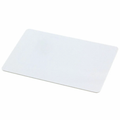
This 125kHz RFID proximity smart card is a classic EM4100-format access credential in a standard CR80 ID-card form factor. Tap it against any 125kHz low-frequency reader and your Arduino, Raspberry Pi, ESP32, or Pico will see the card's factory-programmed unique ID within milliseconds.
Because the EM4100 protocol is the lowest common denominator across legacy 125kHz systems, this card works with virtually every hobby-grade reader (RDM6300, EM-18, etc.) and with many older commercial access control panels that accept generic EM-format credentials.
At a Glance
UID Length
5 Bytes (40-bit)
Form Factor
ISO Card (CR80)
Printable
Yes (Blank White PVC)
Specifications
| Parameter |
Value |
| Operating Frequency |
125 kHz |
| Protocol |
EM4100 (ASK modulation, Manchester encoded) |
| UID |
5 bytes (40-bit), factory-programmed, unique |
| Read/Write |
Read-only |
| Data Rate |
~2 kbit/s |
| Read Range |
Up to ~5 cm (reader dependent) |
| Card Size |
85.6 × 54 × 0.86 mm (ISO/IEC 7810 ID-1 / CR80) |
| Material |
PVC, blank white (printable) |
| Data Retention |
10+ years |
| Power |
Passive (energy harvested from reader's field) |
| Operating Temperature |
-20°C to +55°C |
How to Use
No wiring, power, or soldering is needed — the card is fully passive and energized by the reader's RF field. Pair it with a 125kHz reader (RDM6300 is the common hobby choice) connected to your microcontroller. Tap the card within a few centimeters of the antenna and the reader prints the UID.
For most projects: wire the reader's TX line to your microcontroller's RX pin, open a serial monitor, and tap the card. A 10-character hex UID appears. Use that UID in a whitelist check to gate a relay, an electric lock, or an attendance record.
Tip: Because these are blank white PVC cards, they print cleanly on standard ID card printers (Magicard, Fargo, Zebra) — great for labeled staff/student/member cards with an embedded access token. Printable adhesive labels are a quick low-budget alternative.
Works with: RDM6300, EM-18, and any reader labeled "EM4100" or "125kHz proximity." Also compatible with many legacy commercial access systems that accept generic EM credentials.
Frequency matters: This is a 125kHz (LF) card. It will NOT be read by 13.56MHz (HF) readers such as RC522 or PN532, nor by phone NFC. Match the reader's frequency to the card's frequency.
Frequently Asked Questions
What reader works best with this card?
For hobby projects, the RDM6300 is the go-to — cheap, UART output at 9600 baud, no libraries required. Any generic "125kHz EM4100" reader will also work, including the smaller EM-18 module.
Can I rewrite or program a new UID?
No. EM4100 cards are read-only with factory-locked UIDs. For rewritable 125kHz cards (used for cloning or customizing), look for T5577 or EM4305 chips — different products sold specifically for that purpose.
Will my phone read this card?
No. Phone NFC is 13.56MHz only. This card requires a dedicated 125kHz reader. That's intentional — 125kHz LF is a separate technology from NFC, even though both are broadly called "RFID."
Does this work with commercial access control systems?
Often yes, as long as the system accepts "EM-format" or "EM4100-compatible" credentials. Check your system's spec sheet for "125kHz proximity," "EM4100," or "generic EM" support.
What's the read range?
Typically 2–5 cm with a hobby reader, up to about 10 cm with larger commercial antennas. 125kHz LF is short-range by design — that's part of the security model.
Which should I choose — 125kHz or 13.56MHz?
Pick based on your reader. 125kHz EM4100 is cheap, simple, read-only, perfect for small access-control projects. 13.56MHz MIFARE is faster, holds writable memory, and works with phone NFC. If you already have a reader, match the card to its frequency.
Related Tutorials