

Video Tutorial (Optional)
Watch first if you want to follow along and see the full CircuitPython install process on the Raspberry Pi Pico in real time.
Project Overview
This quick tutorial shows how to install CircuitPython on a Raspberry Pi Pico (or Pico W) using Thonny, so you can start writing code and integrating sensors for IoT projects faster.
CircuitPython is a friendly wrapper around MicroPython that helps you get up and running quickly.
- Time: 10 to 20 minutes
- Skill level: Beginner
- What you will build: A Raspberry Pi Pico set up with CircuitPython and ready to run a test script
Parts List
From ShillehTek
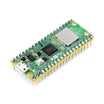
- Raspberry Pi Pico 2W - the WiFi microcontroller board used in this build
External
- Thonny IDE - used to install CircuitPython firmware and write code on the Pico
- MicroUSB cable - connects the Pico to your computer
Note: In Thonny, choose the CircuitPython variant that matches your board (Raspberry Pi Pico W / Pico WH for wireless models, or regular Pico for non-wireless).
Step-by-Step Guide
Step 1 - Set up Thonny
Goal: Install an IDE that can flash CircuitPython and run code on the Raspberry Pi Pico.
What to do: Download and install Thonny from https://thonny.org/.
Expected result: Thonny is installed and opens on your computer.
Step 2 - Configure the CircuitPython interpreter and install firmware
Goal: Put the Pico into BOOTSEL mode so Thonny can install CircuitPython onto the board.
What to do: Hold the BOOTSEL button while plugging the Pico into your computer via MicroUSB. This mounts the Pico as a storage volume so you can install the CircuitPython firmware.

In Thonny, go to Tools > Options and select CircuitPython (generic) from the interpreter dropdown. Select the appropriate port, then choose Install or update CircuitPython on the bottom right.
Select the target volume, then choose the CircuitPython variant as Raspberry Pi Pico W / Pico WH. If you are not using the Pico W version, select the regular Pico version instead.
Click install and wait.
Expected result: CircuitPython installs successfully and you can begin writing CircuitPython code on your Pico or Pico W.
Step 3 - Test it with a sample script
Goal: Confirm CircuitPython is running by flashing the onboard LED.
What to do: Try the sample LED blink script from Adafruit: https://learn.adafruit.com/getting-started-with-raspberry-pi-pico-circuitpython/blinky-and-a-button.
Expected result: If everything is set up correctly, you should see the LED blink.
Conclusion
You installed CircuitPython on a Raspberry Pi Pico (or Pico W) using Thonny and verified it works by running a blink example. With CircuitPython running, you can start integrating sensors and building IoT applications more quickly.
Want parts for your next Pico build? Grab what you need from ShillehTek.com. If you want help customizing a CircuitPython project or integrating it into a product, check out our consulting: https://shillehtek.com/pages/iot-consulting.
If you found this useful, please leave a comment and subscribe to my channel. Stay tuned for more content.


.png?v=25000753014097803521791168436)

.png?v=68677308723310773341791168436)


